Showing posts with label homeschooling. Show all posts

Seven Quick Takes: Volume 30

March 28, Feast of St. John Capistrano, confessor.

-- 1 --


-- 2 --


We've been ill with colds over the last few days, so I spent most of my time in bed watching Avatar: the Last Airbender on my dad's Netflix.  Much like my Firefly revelation, I can say heartily "I get it now!"  It's warm, breathing characters make the show.  Without them, Avatar would be just another fantasy world with all the good guys uniting to defeat the one really evil overlord, but it's the characters' development and personal struggles that kept me from clicking away to watch Portlandia.  The fact that they've managed to do all this while not complicating is a real strength, I think.  It would have been so easy to misconstrue "simple" with "shallow."  Somewhat reminds me of Ender's Game in that way.  It's easy to understand and follow the deep emotional and moral questions without dumbing them down.

The only thing I just couldn't get into is the same thing that made cast down The Golden Compass in the first chapter.  Reincarnation isn't in itself something I can't accept for the sake of story; it's the I'm-more-than-one-person-at-a-time thing.  If you're not familiar with Avatar, the main character Aang is a reincarnated being similar to the Dali Llama.  But when they present his past lives as other selves--as opposed to times when he lived other than in his present lifetime (think Tolkien's elves or "the sending back" of Gandalf in tLotR)--my Thomistic sense of philosophy rejects it with all my being.

Despite that, look for a 10 Reasons You Should Watch Avatar: the Last Airbender post in the future.


-- 3 --


I'm brushing up on my Welsh with a Welsh starter course, and I'm pleased with how much I've retained.  I never learned it like I wanted to when I was here before.  The free course offered at the university conflicted with my one and only weekly lecture.  And then I was elbow-deep in my studies (and a romance!).  It will be good for me in the future to speak conversational Welsh when looking for work.

The Welsh language is one of the reasons I wanted to study in Wales.  It's beautiful, lyrical, and not as hard as Irish.  And while it's phonetic, the spelling is intimidating and lovely.  Words like llyfr (book), cynnwys (contnets), and wyddor (alphabet).

Hint: the y and w are actually vowels.


-- 4 --


I've never heard a child eat so expressively.  With each bite or sip, Afon growls and "mmmmmmmmmm!" from the very depth of his little being.  It's the cutest.

We took him to visit a playgroup yesterday.  It's like a preschool, though it starts with two-year-olds, and then they move on to the actual preschool, which they call nursery school.  It's almost fully funded, and with my experience working at a childcare center I could see that they were very well run.  We signed him up for two days a week, for the social interaction.  They are also trained there in speech therapy and working with children who have disabilities, so I think this is a good choice, though it makes my homeschooling-wannabe self a little nervous.  They were already talking about him going on to "nursery school" in the September term.  Now as I'm typing this, I think I ought to look up some homeschooling groups in the area.


-- 5 --


There were a handful of things I prepped myself for before moving across the Atlantic, some good some not so good.  Things like:

  • the cashiers at the stores sit down and aren't required to help you pack your groceries
  • you bring your own grocery bags or get charged for each they provide for you (granted, they're much sturdier than the flimsy, see-through bags Walmart offers)
  • the electrical sockets themselves have an on-off switch
  • people ask "Do you drive?" instead of "What kind of car do you drive?"
  • Worcester sauce tastes good in everything; this is an indisputable, scientific fact
  • flowers are a part of daily life, not just for special occasions; if they don't have them in pots or planted in the yards, the shopping carts have built-in holders for affordable bouquets of flowers--and people do use them
  • curtains are functional--75% or more of the population use closing curtains rather than blinds
  • there are two taps (faucets) at each sink, one for hot water and one for cold; there's no way too get luke-warm unless you mix them
  • there are duplexes everywhere, aka semi-detached home; even the name suggests that the norm is to have houses smack up against one another
  • the doctor is seen in his actual office, rather than moving around to patients in consultation rooms
  • Mother's Day is this Sunday, not in May
  • and, of course, the left side of the road, fish-and-chips, metric system, yadda yadda, etc.

Hm.  I'm beginning to see the formation of a master "You Know You're in Wales When" list.


-- 6 --


I'm finally happy with my title banner picture thing-y on the top left side (for now).  As I've mentioned previously, I'm the worst kind of perfectionist, so this is kind of a big deal.  And um, just in case you were wondering when the look of this blog was finally going to settle down (for now).


-- 7 --


The bedroom window is open to let the cold freshen the the room, and Afon and I have a game of bed-making calling our names (he lies under the covers and I throw the duvet up-and-down, up-and-down, like a parachute).  Thank you to everyone who have sustained us with your prayers and intercession throughout this tedious transition.  It's feeling more and more like home everyday, and I'm so happy to be at home with my baby.  I've got more energy now to play with him and attend to him than I ever had when I was working and worrying about paying the bills.  God is good.

Take a moment to add me to your Google+ circles (bottom left side bar) if you keep with that kind of thing, and visit other Seven Quick Takes at Conversion Diary.  Have a lovely weekend!
sig

Liturgical Living: the Domestic Monastery

Feb. 24, Feast of St. Matthias, apostle.


The old home place--get this--architecture style called "the Florida cracker."  No joke!


I don't think it's coincidental that the beauty of the rhythm of Waldorf education and the success and effectiveness of the rhythm of monastic life both attract me.  After all, both draw from nature and the natural world; the sun, with variation, follows a strict schedule, and doesn't come out to dance at midnight (excepting a few special occasions, feast days, miracles, and the like. . .).  Fall follows summer, which follows spring, which follows winter.  And never is it the other way round or chopped up winter-fall-summer-spring, except maybe in a poem by e.e. cummings.

I like that both philosophies are intimate with and dependent upon the environment; that they emphasize making, and work with the hands, and traditions.  After reading Jen Fulwiler's post about learning to rise early and adhere to a more-or-less rigorous schedule via monastic hospitality, I tried to do the same myself for a while, with happy results.  I even made Mass a couple of times a week!

I want to attempt that mild success again, and this time attack it with vigor, with full hopes of finding the rhythm that works for us; to integrate education as a part of living, and to integrate living as a part of the great mystery of our Faith.  Or, to put it as Mark Twain did, to "never let schooling interfere with your education."

Education started in the home and did well in the home.  The beloved quote from which I take the title of this blog, in its specific application on mothers and children, works both ways.  It is often looked at to support the mother's special role in mothering--that being a mother means being a teacher, a queen, a task-master, a cook, and a priestess--and that choosing to be one of these things cannot, in any logical sense, be a greater, more encompassing and more prolific role.  But in its other sense, it means that, as the mother is everything to her child in the home, so the home is the primary and first school of the child.  It is not only where he ought to learn how to make his bed, play well with his siblings, brush his teeth, and say his prayers; it is also where he ought to learn his times tables, how to spell pneumonic, and about the succession of the kings of England and the Declaration of Independence.

As always, my tracks of thought turn to the Church-dominated Middle Ages and find the Ideal and the Blueprint, all in one.  In the Dark Ages, the monasteries were tiny pricks of light in the darkness, fostering and holding close the flame of truth until that time when it was safe to spread it like wildfire.  So too in our times, the home is more than ever a monastery, a fortress of goodness, beauty, and knowledge in a world of growing ignorance and darkness.

To bring my spiraling daydreams to a rough landing, and attempt to keep them grounded, I researched a monastery schedule.  In medieval times, the monk's day started at 2:30 am in the morning, which is a little impractical for people who depend on grocery store's opening hours.  Still more modern versions have the abbey dwellers rising early and in bed by eight--a little more doable.  But I've sketched out a rough idea of what a possible day of monastic home schooling might look like in our future:

7:00am--Wake
7:05am--Morning Prayer and Meditation
7:30am--Dress
8:00am--Breakfast
9:00am--Mass
10:00am--Work*
12 noon--Dinner
1:00pm--Nap
3:00pm--Work*
5:30pm--Supper
6:00pm--Leisure
7:00pm--Exercise
8:00pm--Shower
9:00pm--Bed 
*Home schooling curriculum, writing goals, blogging, crocheting, spinning, crafts, and other projects, as determined by day and season.

Obviously, I've no idea of the actual practicality of such a schedule.  But I aim to try it.

What does your day look like?  How do you go about perfecting your domestic monastery?

sig

Liturgical Living: Educating the Whole Child

Nov. 13, Feast of St. Frances Xavier Cabrini, an Italian native and the first U.S. citizen to be canonized.  She became a missionary to the poor and sick in the United States and died alone in a chair in the hospital while make dolls for orphans for a Christmas party.  At the time of her death, over 5,000 children were receiving care in her various institutions.  Mother Cabrini is the patroness of hospital administrators, immigrants, and orphans.


Now that my son is in childcare--though he's only in another room of the small building, while I'm in the office--I find my thoughts hovering around and circling back to the concept of education.

I tutored three home-schooled children for a total of almost two years.  Basically, I was their English and literature teacher.  The experience was a powerful blessing and one that made a lasting impression.  I'd always wanted to be home-schooled, since I begged my mother to withdraw me from public education around the age of seven; but this really cemented the longing.  After this, I thought I would like to home-school my children some day, if I were blessed with any.  And as the years run irreversibly, I've grown more and more attracted to the possibility.

Over those years, I've gleaned little bits of information here and there about different educational styles and pedagogues.  I like aspects of several different methods.  As of yet, not one pure style fits the bill.  Not that it's necessary.  As I've interviewed home-schooling families, I'm surprised-yet-not-surprised to learn that a tailored approach to education rather than a textbook one, no pun intended, is the norm rather than the exception.

My son will be three years old in February, and while I'm in no rush to cut short his infancy and hurry him into the long, intimidating span of his educational career (which could last anywhere from thirteen to twenty-three years, depending on whether or not he decides to pursue higher learning and how much), I see the foundational building blocks being laid already in his pre-pre-pre-K class for the standard approach that will follow.  I don't know much about Common Core or the politics surrounding it.  But I do know that I want to be able to have full input into my child's education; be witness to and protect his cherished childhood experiences; and to address the formation and cultivation of his whole person, spirit as well as mind and body, giving him a firm foundation in the Catholic Faith and Liturgy.

So, almost unintentionally, I've gathered a small collection of the traits and aspects of home-schooling I appreciate.  It remains only for me to turn them around and examine them closely, weed out the parts I like, snip here, knead there, until I've got something resembling a rude rubric and/or curriculum.

I like the child-led learning of the Montessori school of education.  I adore the seasonal rootedness of Waldorf and its reverence for fairy tales.  Unschooling is very attractive to my undisciplined side.  And yet again, classical education formed my great role models--Tolkien, Chesterton, Lewis--as well as everyone else in the western hemisphere over the last two thousand years.  Charlotte Mason's living books promise to banish dry learning.  Elizabeth Ann Seton anchors everything in the Faith.

I'd like to hear more.  What method of homeschooling do you use, have used, or intend to use?  Or do you combine methods, or just "wing it"?  What have you heard, the good and the bad, about these different pedagogues?  What are plans for children's future schooling, in or out of the traditional school setting?  And why have you chosen this for your family?

sig

7 Quick Takes: Volume 3


-- 1 --

I have my eye on this Canon 50mm f/1.4 lens that costs almost four hundred dollars.  I figure if I put a little money away each week, I will be able to save up.  Does anyone know where or from whom I could buy a gently used one for a marked down price?

-- 2 --

I need more prayer and reflection, and a casual conversation on Saint Augustine made me dig up my copy of The Confessions from college.  At the time I read it in a philosophical-educational context, with a not-so-orthodox professor, so I want to take a second look at it.  It is organized into easily digestible sections.  Keeping an account of my reflections here will motivate me to keep it up.  So that is forthcoming, if all goes as planned.

-- 3 --

I want to introduce the art of acting to my pupils.  Naturally, my first instinct is to plunge into Shakespeare, but he is a daunting project for little readers.  So I was wondering what people think of the No Fear Shakespeare series.  Are they written in play format?  How true are they to the originals?

Do you have any other suggestions for quality beginning theatre for an eleven- and thirteen-year-old?

Do you know why my spell check wants me to spell "theatre" as "theater"?

-- 4 --

Since our free trial for Gymboree expired months ago, the baby has lacked quality peer interaction.  I want to find a once-a-week play group for him to socialize with children his age (which will most likely take the form of poking each other with sticks, but you know).  However, there is nothing available in my area.  Is anyone around here interested in starting something with me?

-- 5 --

At the suggestion of my sister, I've signed up for My Fitness Pal to help me keep track of what I am eating and consciously lower my calorie intake to--fingers crossed--loose weight!  Thursdays not included of course, because Thursdays are tea party days!

Should I put a little tracker here on my blog?  It could be a good thing because then people could hold me accountable.  But it could also be a Bad Thing because, you know, people could hold me accountable!

-- 6 --

I never did get to call my BFF before she went into labor with her second baby.  Welcome, little E.T.G.!  I wonder what it feels like to have two children.  My heart is already so full to the brim with one.  Just when we think we couldn't possibly have any more joy, love surprises us again.

-- 7 --

The 31st Annual G.K. Chesterton Conference is coming up in August!  If anyone from the Tampa Bay area is driving to Reno, Nevada, would you be interested in carpooling and maybe even sharing a hotel room?  I would love to go.


7 Quick Takes Friday: Volume 2

Commonly Confused Homophones


Teach your little ones--and refresh your own memory--about the importance of writing clearly.

1.  You're and Your


Child, you're going to ruin your new shoes if you go out in the rain.

2.  Than and Then


When you are better than your teacher at composing sentences, then you can teach the class.

3.  Complement and Compliment


The man complimented the couple on how well their outfits complemented each other.

4.  It's and Its


It's difficult for the fat cat to clean its fur.

5.  Affect and Effect


The effects of this economy has  unhappy affects on many poor families.

6.  Bear and Bare


I cannot bear to see a baby's bare head in the heat of the day.

7.  Loose and Lose


The house-sitter will lose her job if she lets the dogs loose.

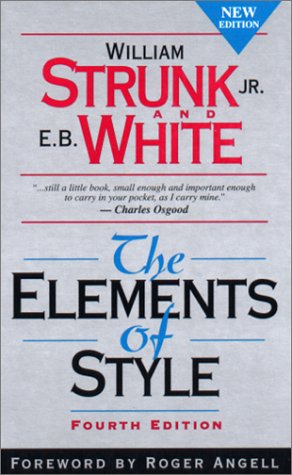
For further reading, see Strunk and White's The Elements of Style and Lynne Truss's Eats, Shoots & Leaves.


Book Review

Love That Dog, by Sharon Creech


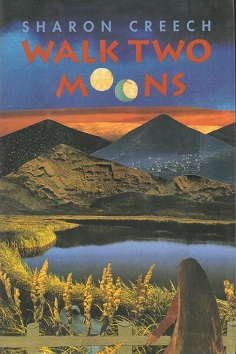
Ms. Creech is the award-winning author of Walk Two Moons, a book I read first when I was twelve years old (just a year younger than the free-spirited yet insecure, tree-loving protagonist, Sal Hiddle) and many times since then.

The Story


Love That Dog is a book about the joy of learning and writing poetry, aimed at grammar school readers, and I have been using it with my youngest pupil to introduce her to poetry, similar to how the character of Ms. Stretchberry introduces poetry to Jack's class.  The story is written in a pleasing and easy-to-follow format, in the form of a diary which chronicles the main character's encounter with poetry throughout the school year.

At first, Jack thinks that writing poems is just for girls, but imitation of his favorite poets and experimenting with words help him find his voice.

Sometimes
when you are trying
not to think about something
it keeps popping back in your head
you can't help it
you think about it
and
think about it
and
think about it
until your brain
feels like
a squashed pea.

With the positive encouragement of Ms. Stretchberry (which takes place "off-stage," so as not to interrupt Jack's narrative), his confidence in his ability to express himself in the written word grows, and he eventually is able to open up about experiences in his own life and find growth and healing.

The Point


As a (bad) poet and lover of literature, it is inspiring and profoundly moving for me to witness a young person encounter the beauty of poetry.  In Love That Dog, this happens on two levels: with Jack in the story and with the person with which you are studying it.  Readers get the second-hand wisdom of Ms. Stretchberry, and the poems she uses are included in the back of the book for context, so that Love That Dog actually becomes a teaching tool in itself.

If that isn't enough, there are free teaching guides that can be easily accessed online.  Everything you need for an interest-piquing and heartwarming introduction to poetry.

I had the pleasure of receiving a letter from Sharon Creech after writing her when I was twenty years old.  What a surprise to find a response from her in mailbox!  I still have that letter.

If it isn't immediately obvious from her stories, my personal experience proves that Ms. Creech is an interactive author who enjoys reaching out to readers.  A great activity for you and your children to do after finishing this book is to follow Jack's example in writing Walter Dean Meyers and write and mail her a little letter or poem.  And who knows--like Jack, you may get an answer back!

You can follow her blog, Words We Say, to keep abreast of her activities and publications.


My Life in Lists

Things I Have to Do Today Soon


These are the virtual sticky notes I have "pinned" to the desktop background of my laptop.  By all means, feel free to comment with answers and suggestions.

In no particular order:

  • Select and edit poems to submit to Poetry Wales.  Then mail.
  • Finish transcribing my journals from Rome to prepare for editing and critique.
  • Find out about local spinning guilds.
  • Call Dr. P. about contact lens prescription.
  • Call back J.
  • Sort dirty laundry for washing later.
  • Start expenses spreadsheets for writing and tutoring/homeschooling businesses.
  • Edit look of the mommy blog to make it cleaner and more reader-friendly.
  • Prepare Thursday's tutoring lessons.
  • Write a scholarly review of the first chapter of The Mists of Avalon.
  • Prepare an excerpt from my MA thesis to post on Arthurian blog.
  • Call G., provided she has not gone into labor to have her baby.
  • Write D. a little letter.
  • Email Prof. Field about my current Arthurian "research," and his.
  • Figure out how to get Instagram (on phone or Facebook?).
  • Buy the poor baby some shoes!
  • DO NOT EAT BAD FOOD.
  • Remember I am doing the 2nd reading at Mass this Sunday.
  • Clean the bathroom.
  • Fill out and mail Miss C. my reference form for substitute teaching.
  • Get fingerprints taken at sheriff's office for substitute teaching.
  • Call back Mr. A. about renewing my Safe Enviornment Training.
  • Empty out the trunk of the car.
  • Renew library books.
  • Read and comment important daily blogs.
  • Not neglect my husband, child, God, and basic hygiene.

Oh, and try really, really hard not to pull this one:

"When I get a little money I buy books; and if any is left I buy food and clothes." -- Erasmus

The Art of Fairy Tales

It goes without saying that my favorite artists from childhood are depictors of fairy tales.  Anyone that knows me well knows I adore fairy tales.
The Twelve Dancing Princesses by Sheilah Beckett
But they are often overlooked and undervalued as "just stories."  We forget the intrinsic value--as well as their convenient use as teaching mechanisms for truth, beauty, and the imagination--that fairy tales have to offer children.  And yes, even adults.   

Especially adults.

As Chesterton said,

"I left fairy tales lying on the floor of the nursery, and I have not found any books so sensible since."


Me too, Gilbert.  Me too.

I will have to devote an entire series to fairy stories, at some point, but that is another task for another day.

Not my personal book, but it could be!
For now I want to share these classic and beloved artists I encountered in the books of my early youth; they made such an impression, I have not ever forgot them.  And when I picked up an envelope for alms at Easter Sunday mass, an elegant and colorful little square illustration caught my attention.  The envelopes were decorated with individual portraits of different saints, and though I had never seen them before, I recognized them like bygone playmates.

I went home and dug up this book, The Twelve Days of Christmas, illustrated by Sheilah Beckett.  I have been unsuccessful in tracking an illustrated book of saints by her, but the search continues.

Meanwhile, allow me to share these tales with you. I encourage you to add them to your own library, whether or not you have children of your own.

Sheilah Beckett


Born in 1913 in Vancouver, Ms. Beckett never attended art school.  She has illustrated many children's books, including the Little Golden Book I saw in the grocery store and begged my mother to buy me.

Her caricatured figures and whimsical animals preceded Walt Disney's major motion picture Snow White.  The detail of period costumes is delightful, and my favorite?  The flowing nouveau-esque hair!

The Gift of the Magi

Lisbeth Zwerger


A couple I once stayed with in England collected children's books illustrated by Lisbeth Zwerger.  The Legend of Rosepetal enchanted me immediately.  She was born in Vienna in 1954 and is an award-winning illustrator.

The only book of hers I have been able to purchase in a bookstore is The Gift of the Magi.  In this book in particular, I admire the sketchy, messy layers of lines that highlight flow and movement.

The Lion, the Witch, and the Wardrobe

Leo and Diane Dillon


This husband and wife team won two consecutive Caldecott Medals for their children's books.  They are well known for their re-telling of African folk stories.

I encountered the pair in a small bookstore when I brought home a used copy of The Race of the Golden Apples.  It is still one of my treasured books with its fusion of smooth color and flat textures.  Their graceful depiction of the human face, in particular, has influenced my attempts at realistic drawing.

- - -

For further reading on fairy tales and their place in the baptized imagination, see J.R.R. Tolkien's essay "On Fairy Stories."

The Love and Appreciation Formula

I am currently tutoring two homeschooled girls, aged thirteen and nine, and I tutored their elder sister (now in college) before I left to study for my master's degree.  All three were bridesmaids in my wedding two years ago.

This last session, they sent me home with a thank you card that read, "We love and appreciate you so much!"  The sentiments are heartily returned.  Still, I'd like to think there must be something I'm doing okay to keep them asking me back!

Over the years, there are a few things I've absorbed that have helped our learning experience that I would like to share with anyone who is interested, whether you homeschool or plan to:

Learning goes both ways.  


The girls teach me as much as I teach them.  I try to always be open to their insights and suggestions for learning.  Some days, it's outright humbling when a blank gaze or a candid conversation reveals that I'm not executing a lesson or explaining a reading in the way that best benefits my students.  Not to mention that they have some profound and valuable insights into life that no expensive four-year degree can buy.

Make lessons relevant.   


If the girls can't see what the point of studying something is, they have less motivation to learn it.  I ask myself, Why do I care?  And then I translate that into an explanation that they understand.


Be easy to reward, never to punish.  


I don't know how this would work in a classroom environment, but for homeschooling, I've never seen any need to punish a lack of effort or a failure to do homework.  (Okay, to be fair, I have some very well behaved students.)  When the girls were younger, I used a "magic box" that had inexpensive toys and candies in them.  Each session, after showing me their homework, they got to pick something out of the lidded box.  I let them see what else was in there as motivation to complete their work for next time.  What I found out: they were always eager to please, but if they didn't finish something, there was no fear or sense of shame or failure.  I would hate that!

Enjoy yourself.  


This one is easy to forget and sometimes hard to execute, but if I'm not interested in what I'm saying, then my pupils probably aren't either.  I try to make lessons fun, whether by using humor, visual aids, or projects and crafts.

I'm certainly grateful for the opportunity to teach others' children and hope that my experiences will help me teach my own little boy when the time comes.  Perhaps these reflections will help you too; if not now, maybe some time in the future.

What do you think?  Do you find any discrepancies with the way that I approach teaching homeschooled children?  Do you have any further suggestions for enriching my and my pupils' experience?