Showing posts with label fairy tales. Show all posts

The Flower of the Imagination: a Case for Dragons

May 3, Feast of Sts. Phillip and James, apostles.


{Please note:  This is a Catholic-interest post, I'm afraid, but that doesn't mean non-Catholics can't chime in and/or enjoy.  Just keep in mind that I write from a heavily Catholic perspective and that a suggestion to dismiss moral value in the arts will be a bit irrelevant to the conversation!}

I've been troubled by a literary trend in the Catholic community that draws severe lines of categorization regarding moral archetypes.*  Harry Potter is the obvious example, an engaging albeit imperfect series with some beautiful moments reflecting Christian truth and values.  But the mere mention of the word "witch" cause some to banish it from their bookshelves forever, without even cracking open the cover.

There is more witchy to Harry Potter than the word, I'll grant, but what about other stories that rename symbols or use the imagery from another culture or civilization?  What about the well-loved A Wrinkle in Time, which merely uses the word "witch" tongue-in-cheek to stand-in for celestial beings, perhaps even angels?  What about the wizard Merlin who appears as a sage and a Christian in C.S. Lewis's That Hideous Strength, who is allowed to use the last bit of pre-Fallen Earth's command of nature to save the world and then to pass on?

In the same type of severity, dragons are dismissed as evil in all literature, and any treatment of a dragon as good is an inversion of truth.  As Catholics, we believe that what is not true comes from the Enemy--that is why he is called the Father of Lies.  But are all symbols so iron and non-negotiable?

In the east, dragons are wise and often benevolent, associated with luck and prosperity.  It's hard to say that this is an inversion, since the civilizations of Asia are far older than those of western Europe, except in the sense that they're symbols are opposite ours.  Which would only make sense, as we are on opposite sides of the globe.

But, people argue, in the Bible the serpent is cursed by God, and should always be associated with evil. Well then, say I, what about Moses's use of the snake on the staff--not even a real snake, but a seeming idol!--to heal and perform miracles?  With this task he was charged by God Himself.  It seems that even in the same cultures, sometimes symbols can be inverted.

There's a similar case for witches.  According to the Oxford English Dictionary, the word witch first appears without any negative connotation; it's not until several centuries later that a second usage appeared that was more or less synonymous with the idea of witches we have today--devil-worshipers or evil spirits (citation as soon as I get back to the library).  Even then, the clear-cut dichotomy of magic being always evil did not exist** and in fact didn't become the majority belief until the late Middle Ages.  Before then, the belief in the supernatural other than God lived side-by-side with a deep devotion to the Church.  One need only look at Ireland as late as the first half of the twentieth century.

I have a theory that the reason why no one saw a problem with this apparent hypocrisy was because it was kept in the proper order: God was Lord.  And the other creatures or ways were rendered impotent, with the sign of the Cross or a a consecrated Host.  Dracula illustrates a superb example of the sovereignty of Christ.  Modern supernatural thrillers would be over a lot sooner if they'd just call the exorcist to bring in the Eucharist.

Vampires are another archetype enjoying a great revival at the moment.  Though as far as I know, vampires have in every time and place been on the evil spectrum of archetype, I have no problem with the modern obsession of redeeming them . . . so long as it is done believably and does not indulge in what Flannery O'Connor calls "sin against art."  I think clinging to the original archetype of the vampire as something dangerous, depraved, and hungry for redemption (John 6:54, anyone?) is what makes him so attractive to modern readers--not that the archetype is inverted so that vampires now appear good rather than bad.***  Our generation is all too familiar with the attractiveness of evil . . . aware of the that strong, thin thread of the Holy Spirit, calling us to salvation.

When I was younger, I used to believe that there were far more absolute truths than there actually are.  Absolute truths about what is beautiful and modest, what is the proper form of worship, who is in the right and wrong on particular political and philosophical issues, even absolute truths in parenting.  But experience and gentle discipline from God have taught me otherwise.

That is not to say that we shouldn't approach our reading material with caution: those with sound formation have a far greater chance for sifting the truth and beauty from the trash and poison in modern literature.  Those struggling or with young children have greater need for discernment.  But if we sweep all stories with non-evil dragons, benevolent witches, and less-than-saintly protagonists into the same off-limits categories, we risk experiencing the deepness that is the story of our Redemption.  We skip to the Resurrection at expense of the Cross.  

We must find a way to kill the weed without uprooting the flower.

------------


*  For further reading, see A Landscape with Dragons by Michael O'Brien.  (Kindle version available here.)
**  I've twelve months of post-graduate study on Arthurian literature and a Master's thesis under my belt to affirm the ambiguity of the magical figure in the Dark and Middle Ages.
***  I speak with limited knowledge on the subject, as I have not read the grandam of supernatural romance, the Twilight series.

sig

Yarn Along // WWRW

April 9, Feast of St. Mary Cleophas, who accompanied Mary, the Mother of Christ, and Mary Magdalene at the Crucifixion.


Something simple and straightforward to get back into the rhythm of crocheting: a soft baby blanket made entirely from double stitches, from here.  When I finish the rows, I'll add a shell border to tie it all in.  The yarn is called "Aran yarn," and I got it from Aldi.  I'm wondering how much more artisan yarn costs.

I've been reading aloud The Girl Who Circumnavigated Fairyland in a Ship of Her Own Making by Catherine M. Valente to Afon at bed- and bath-time.  He only half listens, but I don't doubt for a minute that treating him like an advanced reader can only be beneficial.  I respect books far too much to withhold good ones from him based on something as insignificant as age.  c;

Ms. Valente knows her stuff.  It's delightful to read an author who has so carefully studied Faerie--and as is the way with Faerie (and fairy tales) this book isn't simpering and innocent.  There must be blood is one of the sovereign rules of Fairyland.  There's also lying, witches, blood tithes, and unsympathetic creatures, and that's only as far as we've read.  But the fickle, dangerous, and mysteriously ordered otherworld of folklore and human memory is intact and recognizable.  The witticisms abound, and are somewhere between fact and nonsense--which means it's probably, as is the way with literary things, truth.  Such as the assertion that children have no hearts, which is what makes them terribly thoughtless, reckless, and selfish, and that we grow hearts as we age.  It's biting but beautiful observation, and put in a way that maybe skims the truth of the matter far better than psychoanalysis.

I'll probably recommend The Girl Who Circumnavigated Fairyland, especially for fans of Alice in Wonderland and The Phantom Tollbooth; but the ending remains to be seen.

In addition, I'm reading The Kings and Queens of Wales by Timothy Venning and like it very much.  It's not a tome and divides itself into neat little sections by chronology and then geography.  Research for the first Story (work on the second draft has commenced as of Monday!).  But I also consider it pleasure reading.

Joining Housewifespice and Small Things today.  Happy reading!

sig

Missing the Heart of the Fairy Tale

A Review of Disney's Frozen


Guys, it's moving week, so here is another lazy re-blog from Spinning Straw into Gold that I thought you might enjoy.

------------

I should be sleeping, or reading Harry Potter and the Prisoner of Azkaban, but I stumbled upon this review of Frozen and remembered that I had similar things to say about it.  So.

I liked Frozen.   It was funny, sweet, and well-animated, if a bit buggish (whatever happened to the beautiful, graceful characters from original Disney, making appearances as late as Princess Tiana?).  The songs weren't particularly moving, but I did get the refrain do you want to build a snowman? stuck in my head, so I suppose it was effective.   It takes place in a clear and easy-to-pinpoint location with decent attention to the visualization of culture and customs.   Being a fan of folk culture, and especially Scandinavian folk culture, I enjoyed that part of the film immensely.  But for our purposes here on Straw into Gold, it is imperative that I communicate the residual impression it left with me, which was this: Frozen was not, except by a deft maneuvering of the imagination, a fairy tale.

My problem with Frozen is that it was virtually gutted of all things Faerie.

I don't mean that it was hardly recognizable from its inspiration, Hans Christian Anderson's The Snow Queen, although it was that.  I mean the magic was all but absent.

Oh, there was magic, as in the powers of Princess Elsa to make ice and snow from the touch of her fingertips.  But there was an utter lack of the magic of Faerie; the sense of and cautious reverence for the Otherworld; of danger from an almost-but-not-quite pernicious sentience; of the fickle, and uninterested, yet inexplicably connected existence just beyond the reach of of our own.  There was no alarm at Elsa's powers or inkling that something deeper was going on in relation to them (the curse of a slighted fairy, or the residual trait of an ancestor's mingling with gods); and even the characters' fear of Elsa was not found in the nature and source of the powers but in her potential to do damage with them.  After the ball scene when the new queen's secret is revealed, Anna doesn't even pause to wonder at this astounding development; it's all par for the course.  "So that's why she's shut me out all these years."  O-kay.

Granted, in traditional fairy tales, fantastic events are often presented without any commentary on their fantasticness.  But the fairy tales never mean to make the fantastical belong to the mortal.  There is always an explanation of sorts, even if that explanation shuts out further investigation, like the lid of box snapping shut on a hand.  "She was actually a faerie changeling in disguise."  That's it, that's all that's needed.  A recognition of the Other, of some always-and-ought-to-be unknown.

Even the trolls are pared down to their lowest common denominator, emptying them of all the mystery and danger of the otherfolk and making them mere comical, cartoonish creatures.

Finally, the glass shard in the heart* loses its potency.  Rather than darkening the sight of Anna,** the shard in the eye (generalized to "head" in the movie) only knocks her unconscious and turns white a strand of her hair.  All her memories have to be erased so she forgets her sister's gift-curse and doesn't question Elsa's separation from her.  But that is a secondary, and not a direct, result of the ice shard.  The second ice shard slowly freezes Anna's body but leaves her heart untainted.  What kind of congress with Faerie only touches the outside of a person, only his physical existence; leaves his perception of the world unshaken?

When Anna finally reaches the palace of her ice queen sister, it is opposite of what little Gerda finds when she arrives at the sheer and terrible fortress of the Snow Queen.  Anna finds only a very human girl, with very human hurts and emotions and fears, and the rest of the palace empty.  But Gerda finds the Snow Queen absent--as her nature, one might say, is a great, gaping absence--and dear Kai with his soul half-killed, working away mechanically at a puzzle made of shards of ice, trying, yet ever failing, to form the word eternity.  Anna's act of sacrificial love for her sister Elsa breaks the spell, as one would expect.  When Elsa feels and knows her sister's love for her, her frigid emotional walls falter and crumble.  It is a self-administered cure.  But when Gerda finds poor Kai enslaved to logic--the ice-cold logic of the mind, of science, of nature, and of seasons--her shed tears melt his heart and wash loose the shards of glass.

For Faerie is vast and fierce, and we often tremble before it and believe ourselves helpless.  But in this, the heroes and heroines of fairy tales prove us mistaken.  We are not helpess.  Faerie is wild but not immune to obeisance--for those with stout hearts and stubborn wills, though the winter seem endless, and the journey long.


* changed from glass to ice in the movie, so as to remove the uncomfortable and politically incorrect hell-mirror-falling-from-heaven scenario
** who is the combination of Kai and Gerda from Anderson, though Elsa, the Snow Queen figure, has bits of Kai in her as well


sig

The Kitchen Alchemist

Feb. 7, Feast of St. Romuald, abbot and founder of the Camaldolese order in the eleventh century.


"In which I try to make healthful, affordable, easy meals:
in other words, throwing together ingredients in hopes of creating gold."


You know I like my fairy tale metaphors.  c;

There are far better cooks and far better cooking advice out there.  And while I can follow a recipe well enough, my attention is often fragmented (the writer's curse!) and my patience strained.  My favorite type of meal to make is one in which I open the pantry, pull out some ingredients I think would be complimentary, toss them in one pan or pot on the stove, and eat it!

So far, my experiments have been mildly successful.  Probably because of their extreme simplicity.  And I've got pictures.  Lots of pictures.

So I'm going to start documenting my kitchen experiments here, on a not-regular-basis.  I say "not regular" rather than "irregular" because even that word summons an inkling of competency that I lack.  It'll go something like this: ingredients, preparation, and then exams, graded on the rubric of  Time // Ease // Presentation // Affordability // Health // Taste.

 Anyway, stick around for more if you're interested.  It's going to be ridiculous.

sig

The Secret of Kells and the Art of Making

Feb. 1, Feast of St. Brigid of Ireland, the Mary of the Gael, who, among many other miracles, when she asked for land, was granted all that her cloak would cover.  When she lay down the garment, it spread for miles.  She was born into a high Druid family and was instrumental in the smooth transition between the the old ways and Christianity.  St. Brigid is patroness of blacksmiths, boatmen, cattle, chicken farmers, children whose parents are not married, dairymaids, dairy workers, fugitives, infants, Ireland, mariners, midwives; milk maids, newborns, nuns, poets, poultry farmers, printing presses, scholars, and travelers.


The Secret of Kells by Carton Saloon
(image source)


In honor of St. Brigid's Day, I'm sharing an old post from my other (often neglected) blog, Spinning Straw into Gold.  Though the holy marriage of fairy tales and the Faith is not immediately obvious, the signs are there for those who pay attention.  I hope, if you like these thoughts, that you'll consider clicking over to Straw into Gold from time to time, where I happen to headquarter my third of our lively Harry Potter book club.

------

I've only recently encountered this delightful animated film from 2009.  The Secret of Kells is about a boy growing up in the walled abbey in Ireland during the time of the Viking raids, while the Book of Kells was being penned and illustrated.  It was an instant favorite for my family, and we play this song to our little one all the time.


This clip shows the highly stylized animation that evokes traditional Irish art.  Much could be written about these exquisite and deceptively simple illustrations.

The plot is straightforwardly simple, so much so that I was a bit surprised when the credits started rolling.  However, after stepping back from the experience of viewing to examine the whole, a clear theme emerged: that of the perseverance of human nature and its ability to create art in spite of trial.

The Book, not yet known as the Book of Kells, arrives in the abbey fortress with the famed illuminator Aidin, sole survivors of a Viking raid to the island of Iona.  Brendan is told by his uncle Cellach to keep away from the Book, as well as the forest that creeps up to the very threshold of their settlement.  Both are dangerous in different ways.

Cellach's intentions are worthy enough; day and night, he labors over the design and construction of an immense wall, intended to hold out the Vikings and defend the abbey and those who look to it for protection.  But the lure of the Book's mystery speaks to young Brendan.  Once he glimpses the fantastic illustrations, he longs to be a part of its making.  He risks disobedience at Aidin's behest and ventures into the woods to find berries for ink.  There he meets Aisling, a native faerie, who befriends him and teaches him the mysteries of the wood.  As Brendan's knowledge grows in the art of illumination, so does his appreciation for the art of the natural world.


source


The Secret of Kells is about pushing through adversity to continue making; about the human soul reaching out for beauty, and the way art transforms, even as men and women transform the materials around them into something new, especially works of art.  

In times of trial, we are tempted to point a finger at the dreamers and idealists; it is hard to see what the value of art is in a world of destruction.  Beauty and utility clash.  What good is a lovely song or a moving picture when death lurks at the end of every day?  This is the abbot's unspoken question in Kells.  Cellach, the abbot of Kells, was once an illuminator himself.  Jaded by hardship and worry, he forsook it and took up the task of building a wall to protect those under his care.  So desperately does he try to preserve life at any cost, he shuts out that which does not directly contribute to that aim.  He banishes his sense of wonder and refuses to acknowledge beauty.  One cannot eat a poem, he reasons.  A painting cannot stave off death.

What Cellach believes will protect him, however, ultimately proves useless.  Only, having shirked joy and the hope inherent in creating things solely for beauty's sake, he has failed to treasure the gifts and talents (and people) he had while he had them.  He has neither safety, nor hope.

Fortunately, the film doesn't end on the wasted Kells and the empty abbot.  Brendan, who, with a child's innocent wisdom, recognized in his own way the importance of the Book, facilitates his uncle's reconciliation with truth and beauty before the end.

It's a well-made, thoughtful movie, and I highly recommend it.  Whether intentionally or not, The Secret of Kells speaks to why we should still tell stories, especially fairy tales.   Our voices matter, and our efforts are not made in vain; just as the aged monk's were not, who could not have guessed the profound richness with which he endowed humanity, when he first picked up ink and quill.

sig

Nadolig Llawen!

Dec. 24, Vigil of the Nativity of Our Lord.


". . . there is a veil covering the unseen world which not the strongest man, nor even the united strength of all the strongest men that ever lived, could tear apart.  Only faith, fancy, poetry, love, romance can push aside that curtain and view and picture the supernal beauty and glory beyond.  Is it all real?  Ah, Virginia, in all this world there is nothing else real and abiding."

Christmas blessings to all who visit this blog and all their loved ones, and to our Eastern and Greek brethren, the same hearty sentiments in a few weeks' time!  Nadolig llawen!

sig

What We're Reading Wednesday


What?  Yes?  Reading?

My absence from the internet in times of business reaps benefits other than accomplishing my necessary tasks.  It means that in those snatched minutes between breathless runnings to-and-fro . . . I can read!  That, and I'm getting over a cold, and nothing says get-over-your-cold faster than forgoing all chores for reading in bed (while your two-and-a-half-year-old "deconstructs" the house).

What we're reading this Wednesday is:


1.  Harry Potter and the Chamber of Secrets by J.K. Rowling


It started off a bit slow for me, which might explain why I never continued with the series the first time I read The Sorcerer's Stone.  It picks up after the first three chapters or so, as my fellow book-clubbers promised.  People seem to either love this one or hate--sometimes both.  Reactions to chapters two-at-a-time can be found here.


2.  House of Many Ways by Diana Wynne Jones


This sequel to Howl's Moving Castle (one of my all-time faves) took a little bit more time to get into.  If I had to put my finger on why, I'd say that the young girl in an old woman's disguise was an interesting inversion of the traditional fairy tale and that I was pretty much a Howl fangirl from the word "go" (why?  I'm sure a real-life Howl would be outright insufferable!)  But HoMW has proved to be quietly enjoyable.

The magic in Diana Wynne Jones's novels are of a domestic sort--you won't find wand-waving and army-conquering, at least not right away--what you do get is a lot of laundry multiplying, soap bubbles, and spells to unfreeze pipes.  I like it a lot; it shakes off the staleness of high fantasy tropes while retaining the delight.  Jones's characters are severely clear-cut: you've no confusion about them, how they feel about the world, and what their mission is just a few pages in, but they're not two-dimensional.  There's quite a lot of hrumphing and foot-stomping.  And it's nice to get such a straightforward plan of action from an author.

"What do you mean by tidying up my room?" Charmain demanded. 
Peter looked injured, even though Charmain could tell he was full of secret, exciting thoughts. 
 "I thought you'd be pleased," he said. 
"Well, I'm not!" Charmain said.  She was surprised to find herself almost in tears.  "I was just beginning to learn that if I drop something on the floor it stays dropped unless I pick it up, and if I make a mess I have to clear it away because it doesn't go by itself, and then you go and clear it up for me!  You're as bad as my mother!" 
"I've got to do something while I'm alone here all day," Peter protested.  "Or do you expect me to just sit here?" 
"You can do anything you like," Charmain yelled.  "Dance.  Stand on your head.  Make faces at Rollo.  But don't spoil my learning process!"

In the context of a story like House of Many Ways, the main character stating her growth mid-novel isn't just appropriate--it's hilarious.  And there are a lot of moments like this one in HoMW.  Also, Jones's style of writing makes a case that you don't have to write complicated prose for a good story, but you do have to be something of a wordsmith to make simple writing sing.  I haven't finished it yet, but I'm already looking forward to reading it with my son when he's of age.


3.  Ruby's Wish by Shirin Yim Bridges


This beauteous picture book from the library has been one of our favorite nightly reads.  I like east Asian culture in an amount disproportionate for someone with absolutely no ties to it (same with Scandinavia, actually), and the story is well-crafted and satisfying.  The illustrations by Sophie Blackall are stylized effectively; I enjoy seeing something new in them with every read.

Ruby's Wish is about a little girl nick-named Ruby growing up in old China, as the grandchild of a very large and wealthy family.  She loves to learn, but she is disappointed that only boys grow up and go to university.  When she expresses this disappointment to her grandfather, he takes it carefully into consideration.  Then, one New Year, instead of lucky money from her grandfather, she is given a letter from a university accepting her as one of the very first female students.  The last illustration shows a two-part picture frame, with the illustrated little Ruby on the left, and a real photograph of the author's grandmother on the right--a true story!--gives me goosebumps every time I read it, and you'll have to discover the last line for yourself!


sig

Seven Quick Takes: Volume 16

-- 1 --


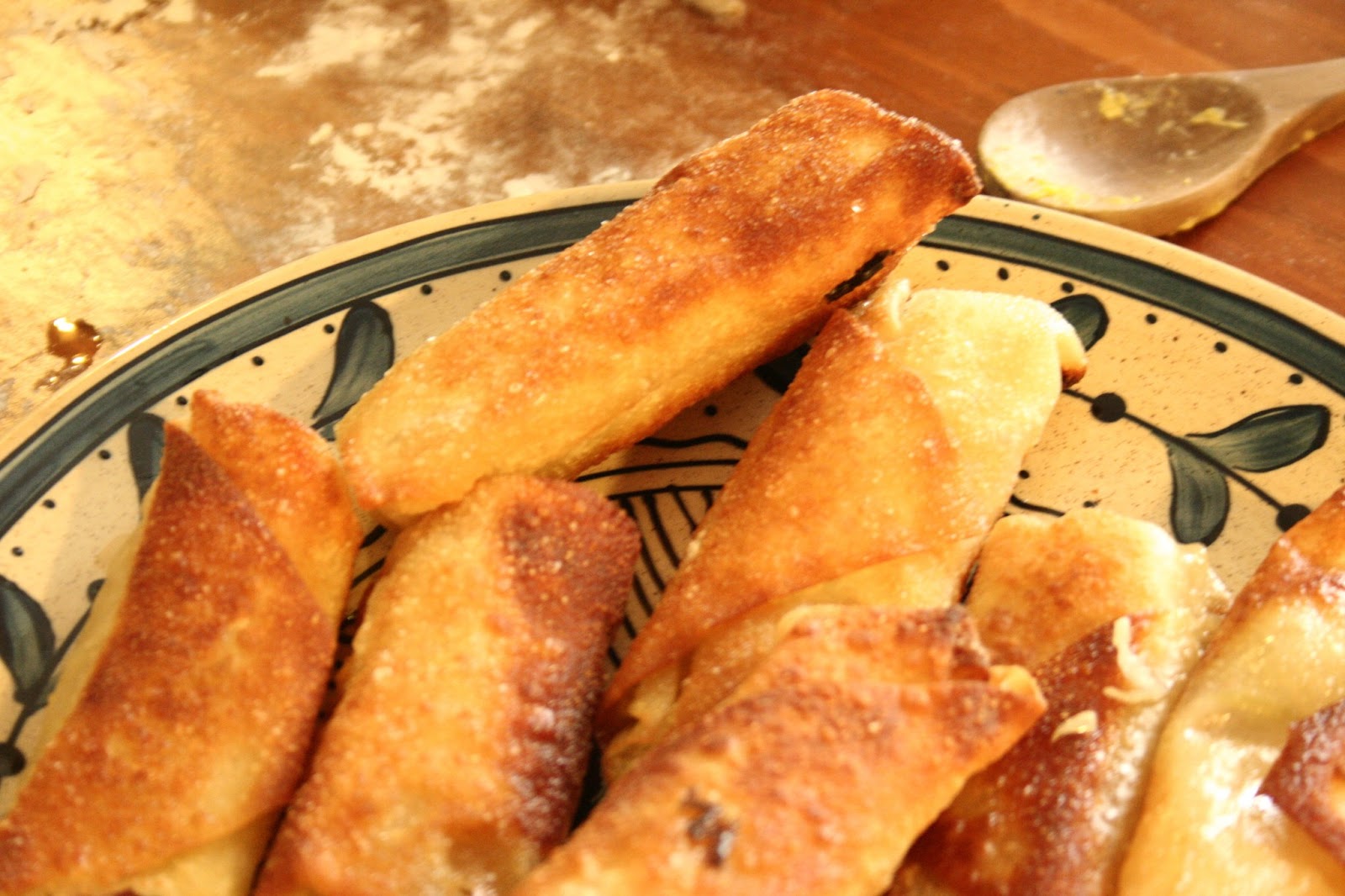
Look!  I executed a mildly successful non-recipe on Wednesday, and it was yummy!


Egg rolls.  I think.  Here's the quick version.

 photo 9fc90987-45ef-4be2-8da8-d20d65935cc2_zpsfba4ce00.jpg

Instructions for cooking come right on the Nasoya package.  You can fancy it up by adding sauteed pork, peanut sauce, and sprouts; or even go southwestern with black beans, rice, and cheese.

Out of a super-neat coincidence, I found a similar simple meal idea on Romancing Reilly.  Yum!

-- 2 --


I got the paper copy books in the mail last week, three total.  One is being reviewed by my parish priest so he can approve it for Mary's Cova, our flourishing little library.  So I have two left.  I'm pretty sure I want to keep one for reference purposes, but the other I've considered making my first Everything to Someone giveaway!

So what's gonna happen is that I'm gonna talk about it for a little while to build up awareness and then probably do a random drawing thing.  2012 Tuscany Prize for Catholic Fiction Collected Short Stories: it could be yours!  Stay tuned, folks.

-- 3 --


It's time to "come out of the closet."  I'm participating in April's CampNaNoWriMo, which is super silly because I have way more important things I should be doing, not least of which is editing and drafting the second version of the First Story, which has been kicking up its heels and being difficult lately.

I've gained a new exhilaration in novel free-writing that suffers from the restraints and discipline of editing; and I think when I come back to the First Story, it will be with a rested muse.  At least that's my hope.

On the other hand, blog talks with the astute Jenna have made me look at novel-writing as a career in a different way, and I think it couldn't be a bad thing to get a few embryonic novels under my belt to have, maybe even for self-publishing, if attempts at publishing the First Story don't go as hoped/planned.

Talking with Jenna has helped loosen me to feeling less snobby about the subjects I write, and trust that the organicness of my faith and love for real literature will find its way in, even in a less poured-over endeavor.  If I hope to make a somewhat viable income as an author some day, I've read enough about the industry to know that quality over quantity is actually the way to go.  Weird, innit?

You can donate too, and I signed up for my own page, goal $150 in fundraising; in case people were more inclined to help if it were connected to someone the actually knew.  I try to be a good citizen.  c;

-- 4 --


I joined my college friends last night for a showing of their original 30-minute film Cakewalk.  These were the friends that graciously suffered me to put my silly face in the college campus movies they made back-in-the-day, which mostly consisted of slightly absurd philosophical musings, parodies of friends, bad accents, and sing-alongs.  Oh, but those were good times!

So proud of them; even prouder to say that theirs was the best film at the showing: subtlety yet humorously written, positive without being hoaky or preachy.  Well acted, filmed, written, edited, and directed.  Appropriate for the whole family but sympathetic to adults, especially parents!  Only more good things to come from them.  And if you're in the central Florida area and have a skill, it's a rewarding hobby to get into, and the arts are more-than-suffering these days, so contact them at The Hippo Critics if you'd like to get involved.

I know, my friends are kinda awesome.  Don't be jealous.  c;

-- 5 --


Out of nowhere, this local company that I adore is hiring.  I'm applying for a full-time position as Client Relations Coordinator.  Not only would this take the strain off of us financially, I know I would love and thrive at this job.  Really.

So call every saint and praying person you know and get them to offer up for me that my sincerity and enthusiasm is clear in my application, and interview, if I am offered one.

-- 6 --


As Grace and Simon were googling "what should I do if my kid pooped in the bathtub," I google searched "how to clean poop out of carpet," and got this.  Apparently, this is a googled enough topic to merit its own wordpress page.

Oh yes, yes it is.  This happened to me not once yesterday, but twice.  The Squirt had been coming to me and asking to change his diaper over the past couple of weeks, then transitioning to taking it off himself and sending me after it.  Now he's just free-stylin' it.  He's clearly ready for potty training, though when I sat him on the big boy potty, he wasn't sure how to go about it.  Then, last night, my mom sat him on the toilet and told him to "go," and he squeezed out five little drops!!!!


He got huge applause AND a cookie.

-- 7 --


My friend Caitlin shared with me this delightful event called The Faerie Folk Festival.  Her library is participating by building a little fairy library!  Alas, it's in New Hampshire.  (More proof that I'm really too close to the southern hemisphere for someone with my hobbies, interests, aversion to heat, and taste in seasons.)

---

Now I'm off to perfect my resume; see more Quick Takes this week at Camp Patton.

sig

3 Reasons I Love Catholicism

Title gives fair warning for the non-Catholic, non mystical-inclined readers (are you there-ere-ere-ere? (echo)).

This linkup is hosted by Micaela on California to Korea, who I am most. definitely  not. jealous. of. becauseshelivesinKoreawithfourbeautifulchildrenandobviouslyawesomehusband.

Really Micaela, only three?  Here goes.  c;

-- 1 --


Remember when things had meaning?  When stepping on a crack meant certain doom, if not for your mother's back, then for some unspoken balance precariously and inexplicably resting on your tiny six-year-old shoulders?    When the colored lights on the Christmas tree indicated a fairy city and your words had so much meaning that you would close your eyes and unwish the mean thing you said about your sister, just in case someone somewhere was listening and it became true?

Catholics live in that world.  The world of ritual, even of "superstition."  It is a world where things retain their meaning, where even the smallest gesture has significance.  We cross ourselves to keep devils away, invoke saints' names to find lost objects, know that the sound of bells indicate the presence of kings and kneel accordingly, believe that a bit of bread and swig of wine are the most powerful and significant material things on the face of the planet, and would die protecting Them.

A Catholic is a man, woman, or child who lives a fairy tale.  (See reason #3.)

-- 2 --


Anyone who knows me for two seconds knows this about me.  My patron saint, my spiritual father, my favorite author.

#CatholicConvert
#ModelforCharity
#Most.Quotable.Man.Ever.

-- 3 --


(See reason #1.)

Not an understatement to say that Middle Earth changed my life as I knew it.  A lonely, bookish adolescent, I had this . . . feeling . . . about the world around me, a feeling I couldn't express, or if I could, was afraid to be found alone in my conviction, rejected, ridiculed, told to "grow up."  Que The Hobbit and, after that, The Lord of the Rings and The Silmarillion, and at last I felt the light bulb click, the moment when my faith and my fancy collided and I realized they were one and the same and that our God is Fearful and Beautiful and Alive and to exist is wonderful, wonderful.

I'll let Jessica explain it:

Looking back into my childhood, there are glints - like shining stones on a path - of Faerie. I've washed my face in the dew of the first May morning, discovered a hidden woodland stream, and played with old coins of unknown origin. These precious moments notwithstanding, I had little overt fantasy in my upbringing, and I didn't truly find Faerie until I found The Lord of the Rings.  
To say that a book changed one's life is banal, but there it is: Lord of the Rings changed my life.
Tolkien enchanted me entirely. I could see things now, simple things, and see their magic. Wax candles, the stars, woolen blankets, the campus lawn: all became sacred. They were holy in their ordinariness. I was overcome. 
To my mind, the most important thing that Tolkien's writing imparted to my views is what C.S. Lewis calls the True myth. As one of those Jesus types, I found myself at last face to face with the fact that I am living the true myth, and that all of the sacredness I first saw is mine to delight in, to keep forever, in a way. My favorite passage in the whole series is the exchange between Aragorn and one of Eomer's riders. The rider scoffs at the notion of halflings, and asks, "Do we walk in legends or on the green earth in the daylight?"  
Aragorn replies: "Not we but those who come after will make the legends of our time. The green earth, say you? That is a mighty matter of legend, though you tread it under the light of day."  
These stories have shaped me so much, and have given birth to much that is good in my life. . .

BAM!  Aragorn says it all.  (Emphasis mine.)

And you know what?  The more Catholic-Tolkien fans I connect with, the more convinced I am that this is not an isolated experience.  More proof that the One Who is Truth and Beauty is at the center of Middle Earth, as in all created things that are good and beautiful.

---

For more reasons it's so cool to be Catholic, check out the link to an old 7 Quick Takes Friday post.

sig

Seven Quick Takes: Volume 8

Literary Things, Bookended


-- 1 --


I've started a bit of autumn decorating with things I've collected over the years, what I've found around the house, and very affordable accents.  We're talking bags-of-candy-corn affordable.

The vintage skeleton-masque child was bought about five years ago at Michaels.


-- 2 --


Joined The Coffee Cup literary discussion forum, and my name got drawn to pick the next short story or essay!  This is going to be fun.

-- 3 --


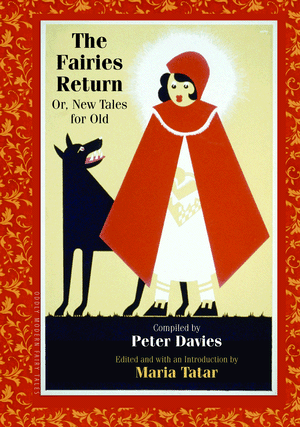
I got a free review copy of The Fairies Return: Or, New Tales for Old, originally published in the 1930's by Peter Davies (the boy who was Barrie's inspiration for Peter Pan).  You can see my reflections on some of the stories from TFR on my fairy tale blog.

InstaCam_2012-10-04_10-42-49-AM

If you're interested in fairy tales or are just a book collector, you can try your luck at winning one of five free copies.

-- 4 --


If you like writing, I'm trying something called Fourth Fridays Fairy Tale Prompt, to help inspire other people who have an interest in writing but want more encouragement, fellowship, and some inspiration.

If you like that kind of thing, please join.  If not, pass it on to a friend, or just come by later to enjoy and support.

-- 5 --


Speaking of writing and inspiration, I submitted a short story for the Tuscany Prize in Catholic Fiction.  They always post an excerpt on their blogs when they review, so I'll be sure to link to it when they do.  In the meantime, go forth and support them.  Submit something of your own.

The first place prize is $500, but they will consider other pieces of interest for publication.  I have mixed feelings about this.  On the one hand, I really want to win something and/or be published in a collection.  On the other hand, I only want this if my story is worthy.  Who knows if that is the case?

-- 6 --


Here's a nice surprise: a new online publication called Unsettling Wonder is calling for writing.  I am so there.

-- 7 -- 


InstaCam_2012-10-03_11-31-28-AM


7 Quick Takes Friday: Volume 5

- 1 -


Since blogging doesn't pay the bills (it's true!), I got a part time job as a deli worker at Your Local Generic American Grocery Store!

That's right, I'm a meat maid.
Like Blossom, only with more meat and a hairnet.

- 2 -


I saw a Halloween recipe magazine in the checkout line today.  It begins!  My favorite time of year is just around the corner.  And I can't get it to come any sooner.  The heat and humidity is so oppressive that the smell of a cool morning in autumn isn't even a memory any more.

- 3 -


My other blog, Spinning Straw into Gold, is hosting a fairy tale writing contest.  If you know someone with a penchant for the fantastical, let him or her know that there are two $15 Barnes & Noble gift cards at stake!

And even if you don't know anyone like that, spread the word anyway.  The more entries we have, the more fun and fellowship for all involved.

- 4 -


Here is some excellent advice from an insightful homeschooler that I want to apply to my tutoring.  Especially the part about memorization.  I never looked at it that way before.

And the reading aloud part confirmed something that I had always felt as well.

- 5-


My homeschooled pupils showed me this delightful spoof of the Addam's Family theme song.  You might have already seen it. It's been around for a while.


Can someone explain to me about the cup-stacking thing?

- 6 -


And in a completely un-controversial (really!) but still related to the Chick-fil-A Appreciation Day controversy way, song, by comedian Tim Hawkins:

Check out his other spoofs, too.  They're all really funny, and appropriate for the whole family.

- 7 -


The baby is liking his baths, and his new little home.  He is getting more and more clever every day.  He says "car," "bye-bye," "hello."  He knows that trash goes in the bin, and that keys go in the door.  He loves to be read to.
InstaCam_2012-07-26_11-44-30-AM
Hope you've had a fun Friday!


Bits and Books

My toddler is like a squirrel.

I find motley accumulations of items and bits of trash stashed away in unexpected places: a board book and a dirty rag in the kitchen towel drawer; a sippy cup in the bath tub; baby shoes in the kitchen sink.

This must be what it looks like to him: me, bustling about the place, stacking, tucking, and folding meaningless objects about the house.

He hasn't fully moved out of the taking-out into the putting-away stage yet, though.  He still enjoys pulling books off of shelves and tugging the kitchen towel from the oven handle.
InstaCam_2012-06-27_06-48-30-PM
"Let me help you with that phone.  I know just where to put it!"
In other news, I picked up this hardcover, color-illustrated volume of Hans Christian Anderson's fairy tales for five dollars at an antique shop, in great condition!
InstaCam_2012-07-12_11-52-38-AM InstaCam_2012-07-12_12-00-31-PM
I am looking forward to the day when we can read it together.

I'm also on the lookout for a used, wooden high chair.  Something he can grow into, until he gets big enough to sit at a normal chair at the dinner table.